How do I repeat 3 times and on the 3rd time play a different end?

RobDMax

Active member
I'm trying to repeat a section 3 times and on the 3rd time through play a different ending. I've tried lots of options, including having a 1 and 2 then a 3 section, that didn't work, the most logical seemed to be use the end sign with no number then and end sign with 3 - to mean all time around use the unspecified repeat but that didn't work either. I can't think how to use a capo to do what I mean. Oh, and then the whole form repeats once, which I specify in the player.
Anyway, this is what have, might anyone suggest a way to do it other than writing it out 'longhand' with no repeat x3

Waiting For A Train 1 - Jimmie Rodgers

If it helps this is the longhand version I've been using thus far which I was trying to simplify:
Waiting For A Train - Jimmie Rodgers
 
Last edited:
The reason for repeat brackets, segno. DS, DC and ending voltas is to save "ink" and space. This is sometimes confusing to the musician,

Space is at a premium in iReal pro due to the single-page limitation.
When the tricky space-saving devices don’t work for some reason and there's not enough room to write out the phrase again, the only option remaining is to condense the needed measures to fit into the space available.
On some charts, that’s not possible to do and still have the chart be readable.
Fortunately, on this chart it is possible.

I think your “longhand” version is the least confusing.
When in doubt, play the chart from top to bottom jumping around as little as possible.

Your longhand chart has (after the intro) 8 bars that are repeated 5 times with a slightly different ending on the 6th repeat. Then a coda.
Waiting For A Train - Jimmie Rodgers

Here is a different way to write it.
Waiting For A Train 2 - Jimmie Rodgers

The benefit here is that if the musician gets “lost”, the last (different ending) section being separate, gives the reader a chance to get “found”.

I hope that’s helpful.
:))BOB
 
Hello Bob, that's very helpful, many thanks, though there's one problem, I don't think you noticed that the 3rd time through and the 6th time through there is a difference, it's the same difference, instead of an Am there's an A in both of those, so I've done a 'normal' repeat, i.e. twice then I've written 'longhand' the 3rd verse with A, but I'm repeating the entire form twice using 'repeats' in the player itself, then I'm adding a coda at the end as before. That condenses but without too much jumping around. But you're right, the original 'longhand' version is the easiest to read and insofar as there is space, it's the one I'll stick with, but I do like to know how to write things even though in this instance I don't need to.

Out of interest this is the version I'd written while waiting to see your reply. In it, I've also extended the coda, we repeat the last line, sometimes 3 times, but also trying to include what we play as a ralentando but doing it by extending the chord lengths to span a whole bar where they are normally half a bar.
Waiting For A Train 1a - Jimmie Rodgers
 
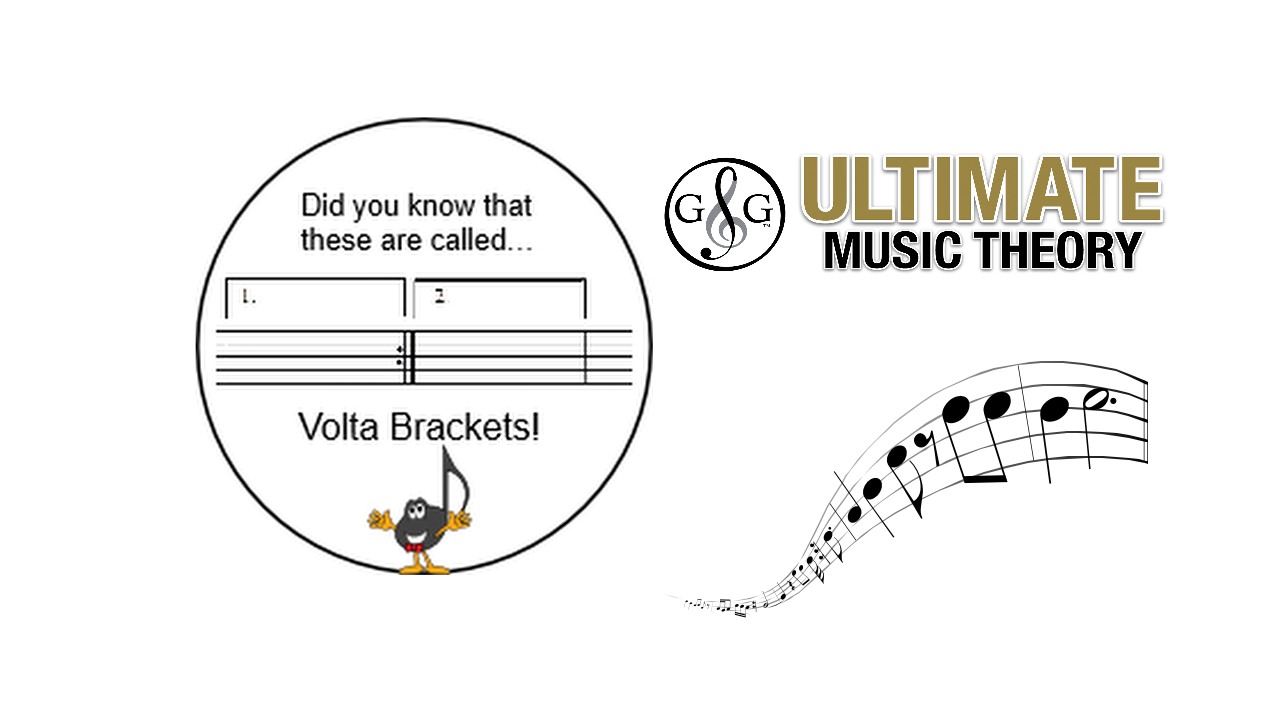
A small subsidiary question, what is the purpose the ending symbol with no number, you have 1st, 2nd, 3rd ending and also a no number ending. I'd tried it when using 3rd ending with no number 1 or 2 ending thinking it might be all endings save the one used, i.e. 3rd, but it's not :oops:
 
This may be useful.
PLAYER CHARTS vs. READER CHARTS


I think that the “blank volta” was included in iRp as an indication for the player that this is the “next” ending when more than 3 are needed. It can be labeled using staff text for the musician but I don’t think additional numbers etc are understood as player instructions.

:))BOB
 
Back
Top Bottom